Common eTIMS Mistakes Kenyan Businesses Make (And How to Fix Them)
Most eTIMS problems don't start as one big mistake. They start as five small ones that quietly stack up until an invoice gets rejected, or worse, a penalty notice arrives. Here's what we see most often, and how each one actually gets fixed.
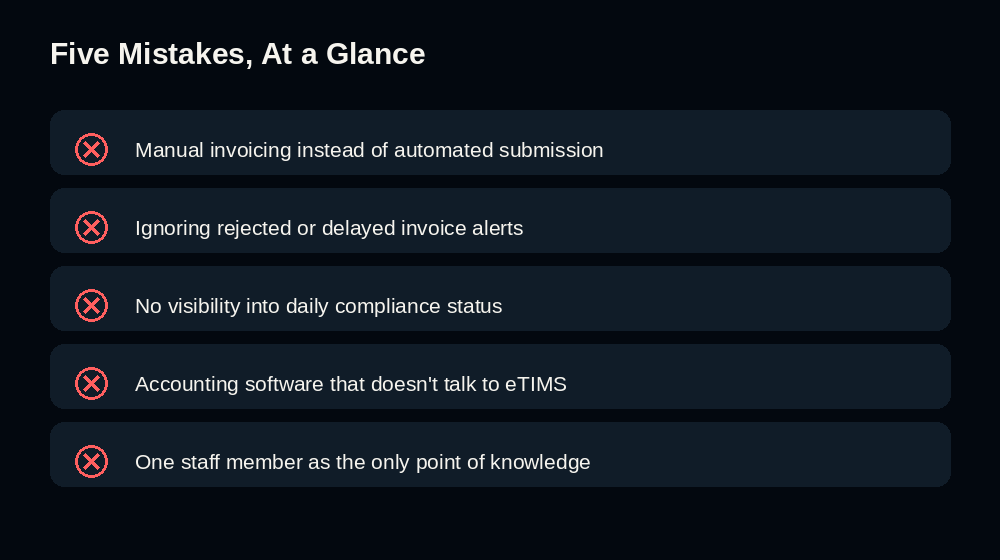
Mistake #1: Still invoicing manually
If invoices are being typed up separately and submitted to KRA as an afterthought, that's not really an eTIMS-compliant workflow, it's a manual process with extra steps bolted on. The fix isn't "be more careful." It's automating the submission itself, so it happens the same way every time without relying on someone remembering.
Mistake #2: Ignoring rejected or delayed invoices
A rejected invoice is KRA telling you something specific is wrong; a tax type mismatch, a formatting issue, a registration gap. Treating it as a one-off glitch instead of a signal is how small configuration problems turn into weeks of backlog.
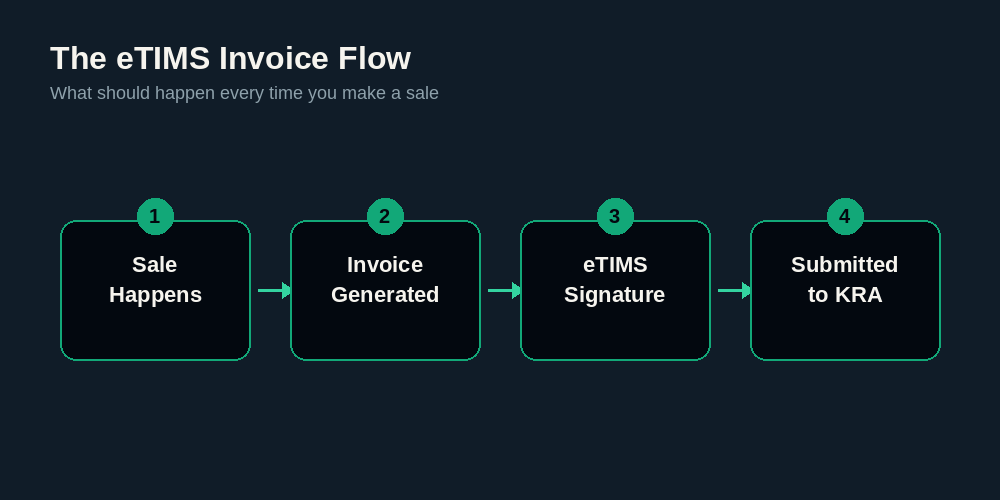
Mistake #3: No daily visibility into compliance status
If nobody in the business can say, right now, whether today's invoices have actually reached KRA, that's a blind spot; not a minor inconvenience. A real-time dashboard should make this a non-question, not something you find out about during a KRA audit.
Mistake #4: Accounting software that doesn't talk to eTIMS
Re-entering the same sale twice, once in your accounting tool, once for KRA; doubles the chances of a mistake and doubles the admin time. These systems should be integrated from the start, not run side by side indefinitely.
Mistake #5: One person who "handles the KRA stuff"
If your entire compliance setup depends on a single staff member's memory, you don't have a system... you have a single point of failure. The fix is making the process work independently of who's in the office that day.
Fixing all five at once
None of these five are dealbreakers on their own. Together, they're exactly the kind of gap a short consultation can spot in minutes, and exactly what proper eTIMS setup and automation is designed to close for good.
More on Compliance
Kenyan Payroll Compliance Explained: PAYE, NSSF, SHIF, and Housing Levy
A plain-language breakdown of the four statutory deductions on every Kenyan payslip, and why manual payroll is one of the easiest places for a small mistake to become a costly one.
Best Business Software for Kenyan SMEs in 2026
ERP, POS, HR, payroll, and CRM software all solve real problems for a growing Kenyan business. Here is what to actually look for before you choose any of them.
The Complete Guide to KRA eTIMS Integration for Kenyan Businesses
Everything a Kenyan business owner needs to know about KRA eTIMS: who needs to register, how integration actually works, the different connection types available, and what happens if you don't comply.
Have a question about your own compliance setup?
Ask on WhatsApp